Equilibrium Scientific, home

About Equilibrium Scientific

The lab first. Then the software.

Equilibrium Scientific fixes the technology under analytical testing labs: the instruments, the data that comes off them, and the LIMS that carries a result to a signed certificate. We pair analytical chemistry, down to accredited methods for every required test, with software built for regulated labs.

When a task follows deterministic rules, the system should handle it. The analyst provides what needs human judgment, then reviews or approves the result.

01 / The chemistryLed by our CEO · 8 years in the cannabis industry

Our CEO

Chemistry and instruments

  • B.S. Biochemistry
  • 8 years in the cannabis industry
  • ISO/IEC 17025-accredited methods for every required test, developed personally
  • Instrument installation and maintenance

The chemistry behind every result.

Our CEO holds a B.S. in Biochemistry and has spent 8 years in the cannabis industry. He brings a deep, practical command of its chemistry: the cannabinoids and terpenes a lab measures, how they change between harvest and analysis, and why the same batch can read differently from one method, or one lab, to the next.

He has personally developed ISO/IEC 17025-accredited methods for every category of testing cannabis requires, from potency to pesticides, heavy metals and microbials. He has also installed and maintained the instruments those methods run on, so he knows a problem from the column to the certificate.

On an engagement, he leads the chemistry and the instruments: whether a method suits the matrix in front of it, whether a result is chemically plausible, and what has to change when it isn’t. Our senior solutions architect covers the data and the software that carries it to a certificate. Between them, a result is covered from the sample to the signature.
02 / Where the software came fromA regulated sterility lab · 2019–2022

We learned the workflow from the people doing it.

Before Equilibrium Scientific, our senior solutions architect worked daily in an ISO 14644-classified clinical cleanroom, using a regulated LIMS and following strict documentation and contamination-control requirements. The gap between the software’s workflow and what actually happened at the bench was hard to miss.

That shaped how we work: learn the real process, make the information flow explicit, and then build the system around it.

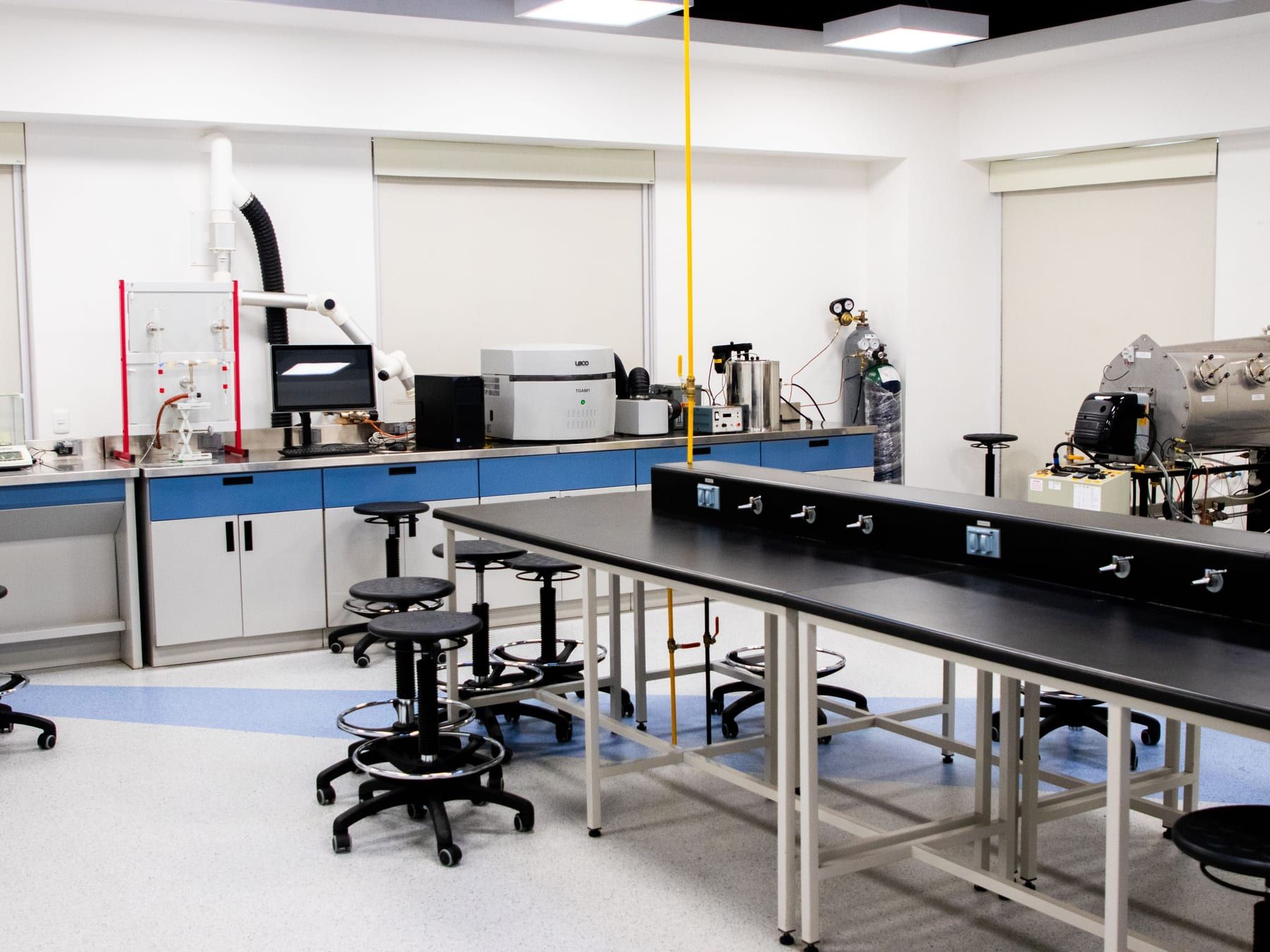
An empty analytical laboratory: benches, fume extraction and instruments along the walls.
Photo: Ludovic Delot / Pexels

03 / The record2022–present · compliance, validation and lab data for testing labs

Faster validation. Decisions sooner.

We designed validation architecture that processes LC-MS, GC-MS and ICP-MS data, cutting analyses that could take a full day or more to roughly an hour. Early-stage labs could decide sooner whether to retest, revise a method, or move forward with a report.

In Michigan, we compressed roughly three months of unfinished ISO/IEC 17025 accreditation preparation into two weeks. In Akwesasne, we replaced a lab’s LIMS subscription with a COA system built in Google Sheets and Apps Script. We have sold complete SOP systems to state-regulated labs, trained their teams, and led teams of 5–10 through accreditation cycles.

The work spans seven jurisdictions, and no client has lost an accreditation.

Read the case studies 

04 / Software behind the workWhat we build for testing labs

The same problem kept appearing in different forms.

At Equilibrium Scientific, it was chemistry validation, reporting and accreditation. In GIMS, it became structured data and configurable workflows.

Different tools, same question: how much routine work are people carrying because the system has left it to them?

  1. Built for testing labs

    Validation architecture

    Processes LC-MS, GC-MS and ICP-MS data. Analyses that could take a full day or more took roughly an hour, so labs could decide sooner whether to retest, revise a method, or write the report.

    LC-MS · GC-MS · ICP-MS data

    See the validation pipeline 
  2. Built for testing labs

    COA generator

    Data entered once becomes calculated results and a finished certificate of analysis, from a template the lab owns and edits. It replaced a lab’s LIMS subscription.

    Google Sheets · Apps Script · editable .docx template

    See the COA generator 
  3. Open-source platform

    GIMS

    For when the real workflow outgrows the spreadsheet. GIMS makes the actual process explicit: structured records, configurable workflows, and a foundation that reporting and automation can reuse.

    Python · FastAPI · SQL · React

    How it fits a lab’s data 
  4. Record integrity

    GIMS Compliance Relay

    A result is only part of the story. The Relay captures instrument files, records who did what, and packages evidence for review, so a lab can reconstruct how the work happened. Designed to support 21 CFR Part 11.

    FastAPI · Tauri · PostgreSQL · HMAC integrity

    See lab data & LIMS 

Why “equilibrium”

A system at equilibrium is at rest, or in constant and unchanging motion. That’s where a lab should be: stable, predictable, and the same on audit day as on any other day.

Talk to us

Bring the instrument, the dataset or the audit.

The first call is free and takes 30 minutes. No pitch deck: just the problem in front of you.