Troubleshooting
Drift, carryover, poor recovery, matrix effects and failing system suitability. We start from your data and change one variable at a time until the cause shows itself.
Instruments & methods
We troubleshoot GC, HPLC, LC-MS/MS and ICP-MS methods in the matrices your lab runs, develop and validate the ones you’re missing, and help you choose and source the next instrument, new or refurbished, then install and qualify it (IQ/OQ).
Free, 30 minutes, with the people who do the work. No pitch deck.
The problemIn the lab’s own words
Drift, carryover, poor recovery and matrix effects look like bad luck from the bench. They usually trace back to something specific: a liner, a column, a calibration design, a digestion step. We find which one, fix it, and write the fix into the method so it stays fixed.
“The GC-MS passes calibration, but the check standards drift and the reruns eat the week.”
“Pesticide recoveries pass in flower and fall apart in gummies.”
“We see THCA in the blank after every high-potency concentrate.”
“Lead turns up in the ICP-MS digestion blanks and nobody can say where it comes from.”
What we doInstruments & methods
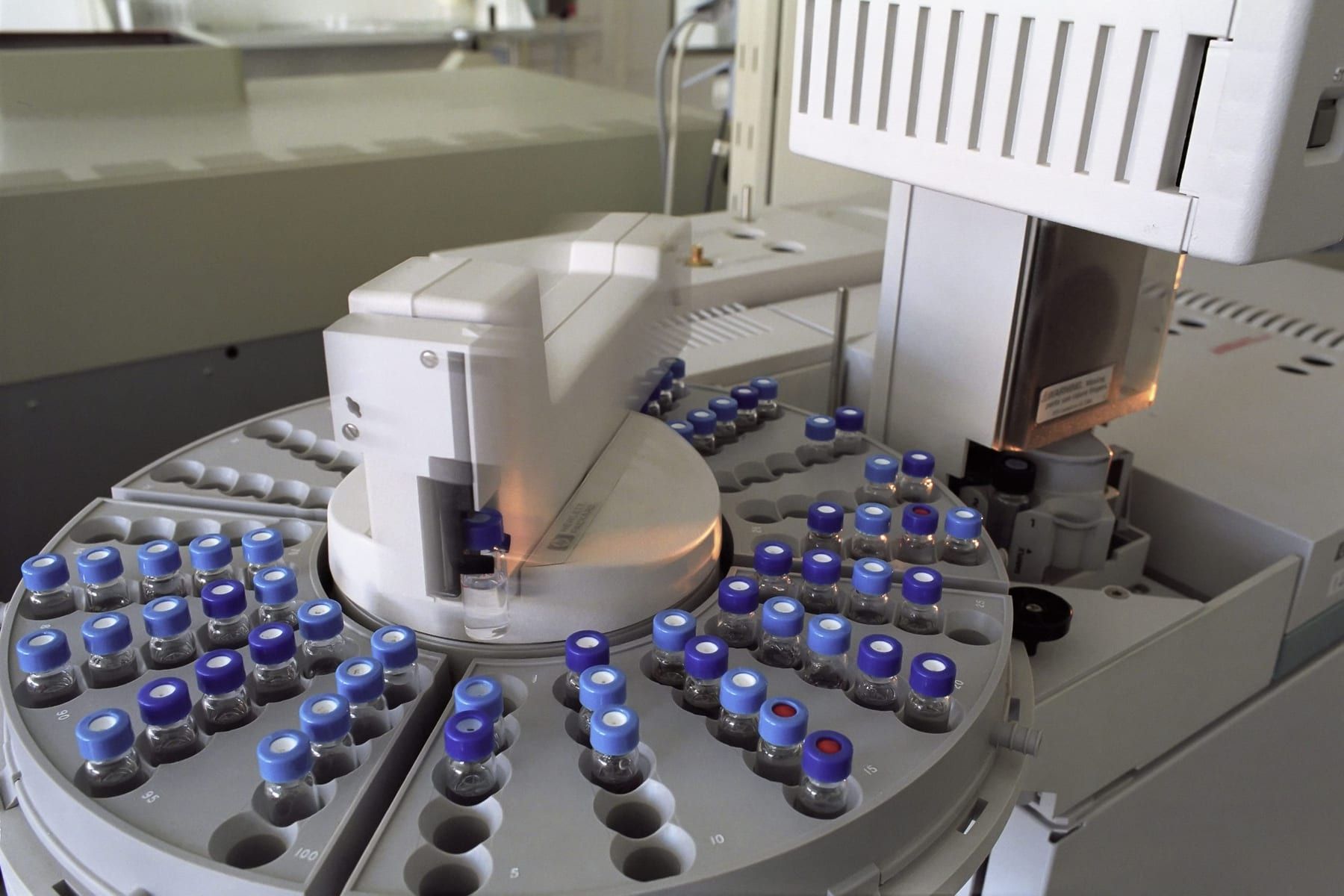
Four kinds of work, often in the same engagement: find what’s wrong, build what’s missing, prove it’s valid, and choose what to buy next.
Drift, carryover, poor recovery, matrix effects and failing system suitability. We start from your data and change one variable at a time until the cause shows itself.
New methods, or a vendor application note made to work in your matrices: flower, concentrates, edibles, beverages and topicals.
The plan, the experiments and the statistics for accuracy, precision, linearity, selectivity and detection limits, assembled into the package a state auditor reads.
New or refurbished systems specified against your test menu, sample volume and budget. We compare the quotes line by line and get the service and warranty terms in writing before you buy.
We install new and refurbished systems and complete the installation and operational qualification (IQ/OQ): documented evidence that the instrument was installed to specification and performs as intended before it runs a regulated sample. Then we set up the maintenance schedule that keeps it there.
How it worksFrom the first call to the fix
The first look costs nothing: bring a recent sequence to the call.
A recent sequence with its check standards and blanks, the method, and the maintenance log if there is one. Exports or screenshots both work.
We read the chromatograms and the numbers, then plan short experiments that change one thing at a time.
The fix goes into the method and the SOP with the data that justified it, so the next analyst doesn’t have to rediscover it.
If the fix touches something the validation relied on, we repeat the affected parameters and update the package.
ProofFigures from our published record
Our CEO has personally developed ISO/IEC 17025-accredited methods for every category of cannabis testing, and has installed and maintained the instruments they run on. Our own software checks the validation data, so the statistics come back while the question is still fresh.
Try itSample data
This one is sample data. On the call, we look at yours: the peaks, the baseline and the check standards that aren’t where they should be.
Twelve cannabinoids, in the order a C18 column separates them. Select one to read what its peak tells a lab, or read all twelve →
CBDVA cannabidivarinic acid · 1.88 min · not detected
First cannabinoid off the column. Usually absent in THC flower. When it is present, its peak has to clear the solvent front before anyone can quantify it.
CBDV cannabidivarin · 2.09 min · not detected
The neutral form of CBDVA. Not detected here, which is normal for THC-dominant flower.
CBDA cannabidiolic acid · 2.59 min · quantified
The acid form of CBD, so total CBD = CBD + 0.877 × CBDA. A small peak in THC flower; on hemp it is the headline.
CBGA cannabigerolic acid · 2.75 min · quantified
The precursor the plant makes THCA, CBDA and CBCA from. Often the second-largest peak in THC flower.
CBG cannabigerol · 2.91 min · quantified
CBGA after decarboxylation. CBDA, CBGA, CBG and CBD elute within half a minute of each other, so a small drift in the mobile phase can merge them.
CBD cannabidiol · 3.08 min · below LOQ
Near zero in THC-dominant flower. The peak is there, but its signal-to-noise is below the limit of quantitation, so the certificate reports <LOQ.
THCV tetrahydrocannabivarin · 3.39 min · below LOQ
The propyl cousin of Δ9‑THC. Its shorter side chain holds less tightly to C18, so it elutes more than two minutes before Δ9‑THC.
CBN cannabinol · 4.61 min · quantified
Forms as THC oxidizes. A growing CBN peak says the sample is old, or was stored warm or in light.
Δ9-THC delta-9-tetrahydrocannabinol · 5.82 min · quantified
The regulated compound. Fresh flower carries little; most of it forms when THCA is heated. Δ8‑THC elutes 0.18 min later, and the method has to keep the two apart.
Δ8-THC delta-8-tetrahydrocannabinol · 6.00 min · not detected
Not detected here. Δ8 and Δ9 differ only in where one double bond sits. That makes them a critical pair: a method that cannot resolve them reports one as the other.
CBC cannabichromene · 7.26 min · quantified
Minor in most flower. It elutes 0.35 min before THCA, the largest peak in the run, so an overloaded THCA peak can swallow it.
THCA tetrahydrocannabinolic acid · 7.61 min · quantified
The dominant peak in THC flower. Heat turns it into Δ9‑THC, so labs report total THC = Δ9‑THC + 0.877 × THCA. The 0.877 is the ratio of their molecular weights (314.5 / 358.5).
QuestionsBefore you book
GC-FID, GC-MS, HPLC with UV or diode-array detection, LC-MS/MS and ICP-MS: the instruments behind potency, terpenes, residual solvents, pesticides, mycotoxins and heavy metals testing.
Often, yes. Most causes show up in the data: the sequence, the check standards, the blanks and the chromatograms. When the fix needs hands on the instrument, we plan the experiments with your analysts or come on site.
We source them, new or refurbished, as part of the work: specified against your test menu and throughput, with the quotes compared and the service and warranty terms in writing before you buy.
Yes. We install new and refurbished systems and complete the installation and operational qualification (IQ/OQ), so you have documented evidence that the instrument was installed to specification and performs as intended before it runs a regulated sample. Then we set up the maintenance schedule that keeps it in control.
If the change touches something the validation relied on, yes, at least in part. We tell you which parameters to repeat and why, so you revalidate what the change requires and nothing more.
A recent sequence with its check standards and blanks, the method, and the instrument’s maintenance log if you keep one. The call is enough to decide whether it’s worth sending.
Start with one problem
Bring a recent sequence to a 30-minute call. We’ll tell you where we’d look first.